
From a client working in a Fortune 500 company:
“Do you have a list of all the things that Airtable is able to do/is used for (i.e. content calendar, project/workflow management, etc.)?
Airtable has been called the Swiss army knife of tools for a reason – it can be used in an array of ways. In this blog, I want to share specifically what Airtable can do for communications teams.
The Challenge: Fragmented Work
When we work with communications teams, we often see the chaos of disjointed systems: work spread across email, Teams/Slack, spreadsheets, and documents. This results in a lack of visibility into the team’s capacity and priorities.
Downstream, this makes it difficult to report on the impact of efforts to leadership. One area that is particularly hard to account for in a fragmented system is reactive work, such as urgent communications that take precedence over planned tasks. This type of work often goes untracked and can impact deadlines and productivity.
This is where Airtable comes in as a strategic system that centralizes data into a single source of truth. Let’s explore how to leverage Airtable for Communications teams.
What Airtable Enables for Comms Teams
1. Project & Workflow Management
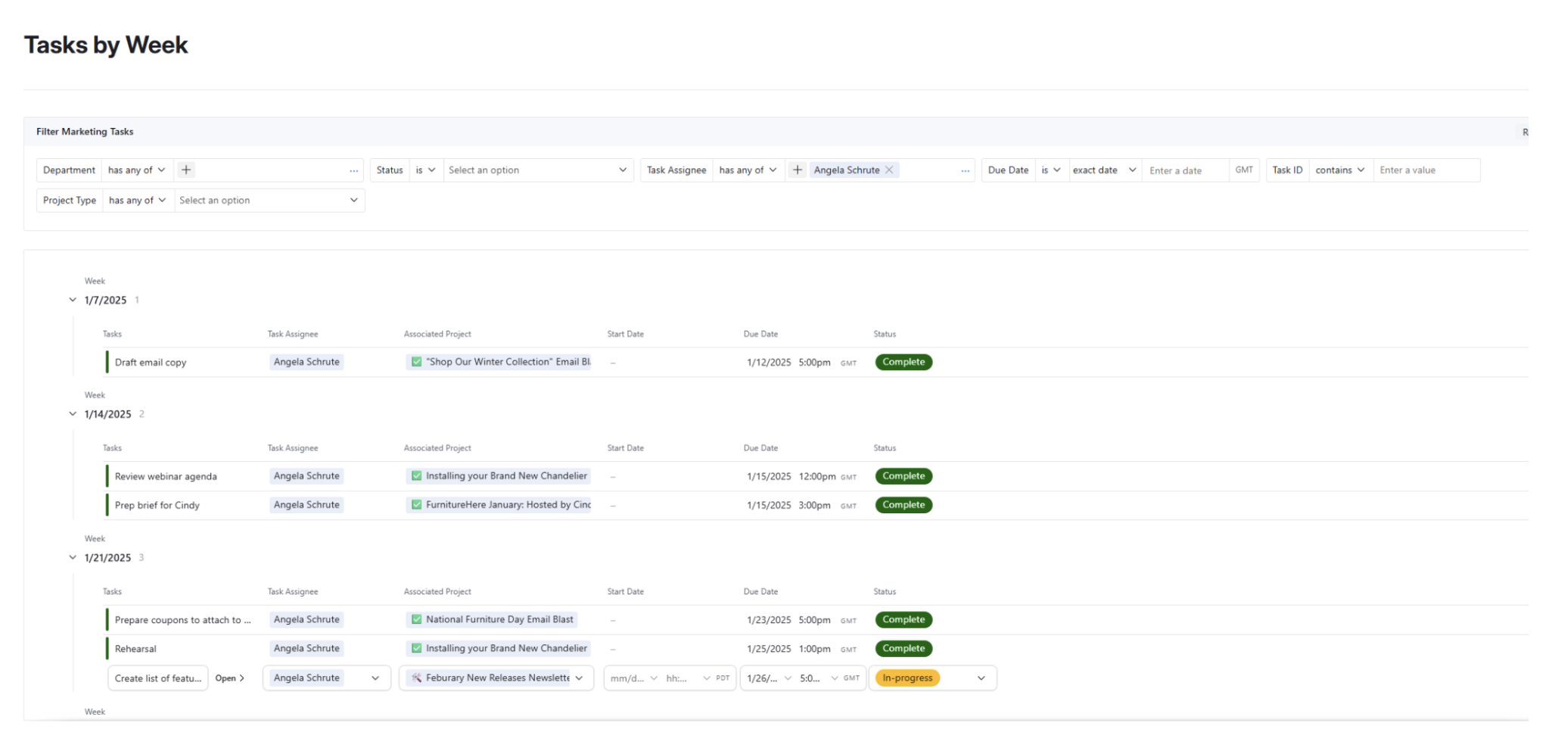
Airtable allows teams to consolidate their systems so that tasks tracked across different tools can be housed in one place. It can track tasks, owners, deadlines, and statuses in a centralized system.
This helps teams align their daily work to strategic priorities by creating a single hub for all communications activity. There is also the ability to set controlled sharing, allowing internal teams and external vendors to access relevant information without exposing all data to every stakeholder.
2. Capacity Planning & Resource Management
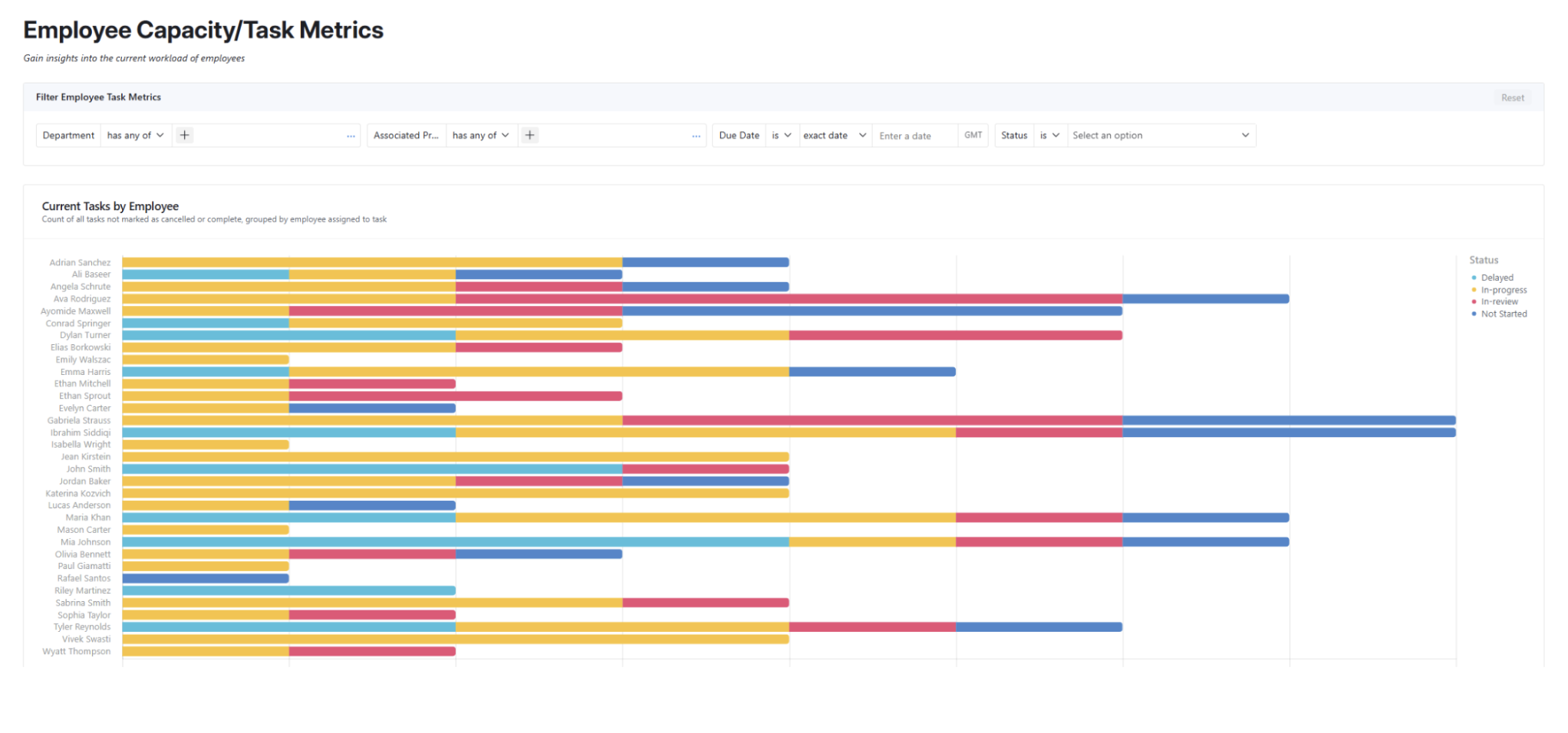
Within Airtable, you can implement capacity planning to understand team bandwidth and task allocation. You can also plan for reactive versus planned work by building in buffers. This enables teams to identify bottlenecks and resourcing gaps more effectively. For leadership, this supports better forecasting and staffing decisions.
3. Streamlined Data Collection & Intake
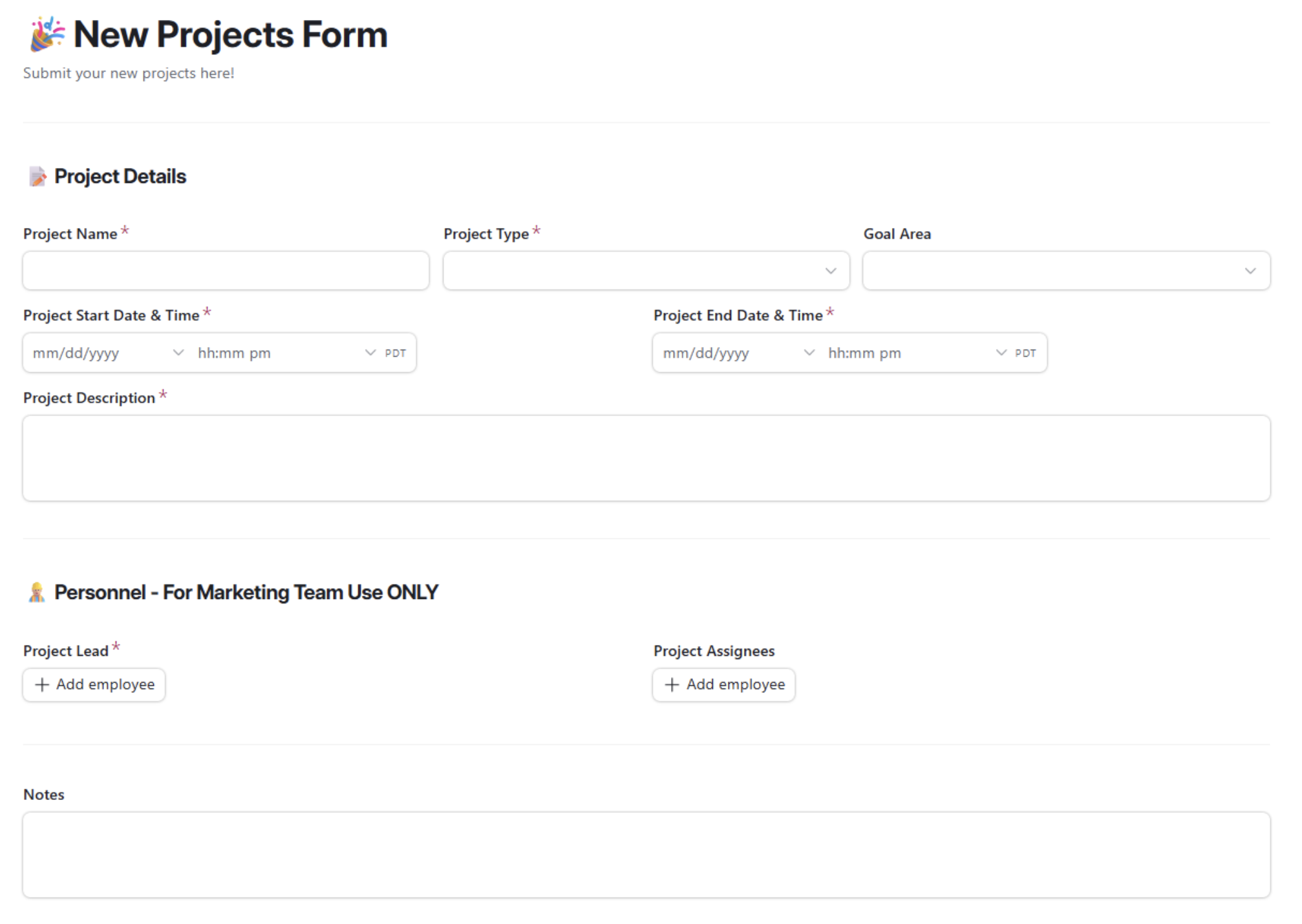
By implementing standardized forms in Airtable, you can streamline incoming requests from other teams. This replaces scattered communication across Teams or emails and ensures consistent, complete information for each request.
One of our clients said that before having Airtable project request forms, they would (on average) reach out to the requester for an additional three times before starting a project! Having consistent information in requests is a huge time saver in the long term for many of our clients.
4. Content Calendar and Editorial Planning
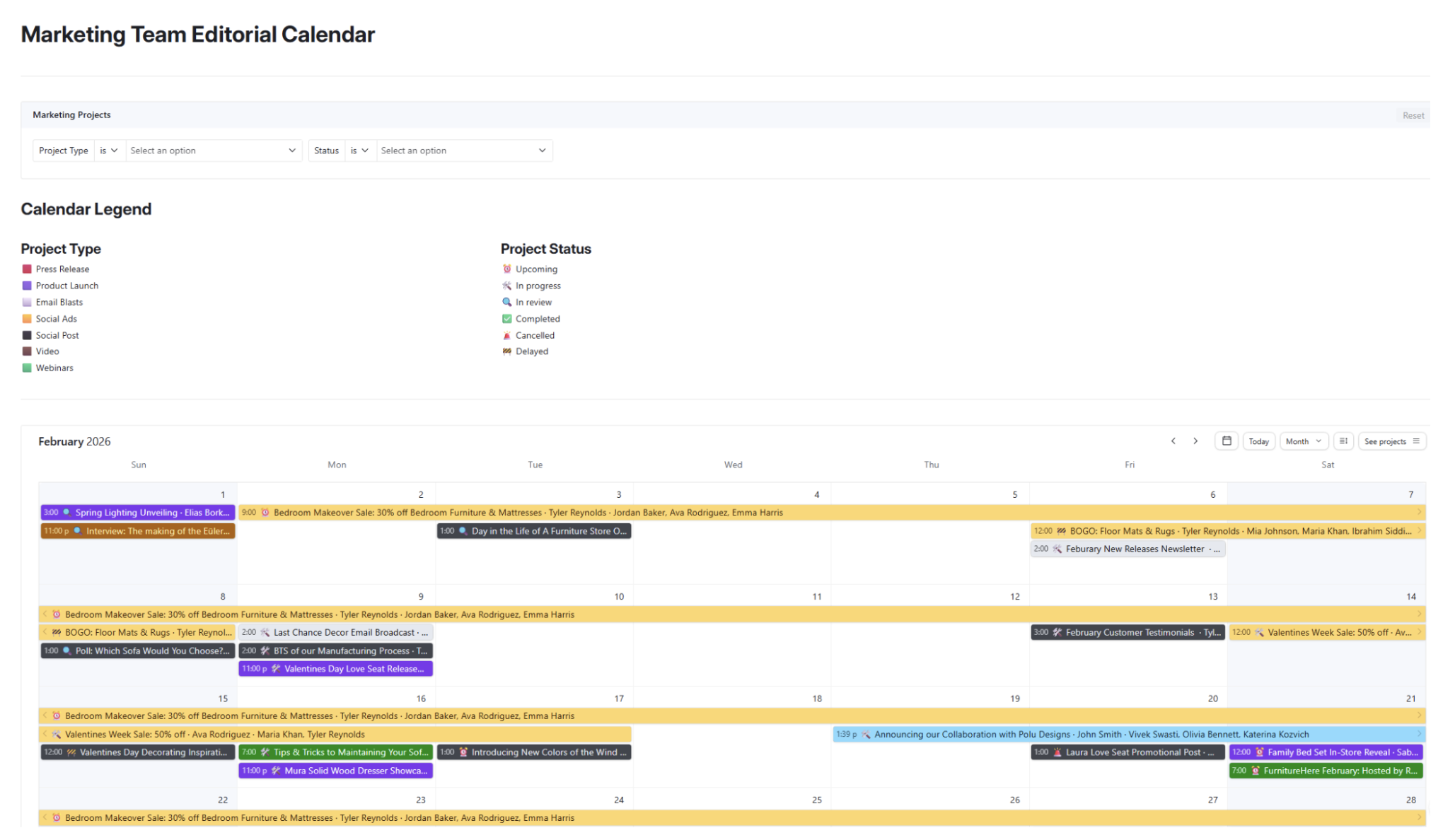
A centralized communications calendar in Airtable allows everyone to have visibility into upcoming campaigns and launches. This helps avoid overlap and prevents too many communications on the same topic or to the same audience. Additionally, Airtable can automate recap or look-ahead updates.
One of our clients said the central calendar improves coordination and ensures their communications are not annoying to the audience. Previously, they had up to six pieces of messaging go out in a day without first checking if they were targeting the same audience.
5. Crisis Communication Management
Airtable allows teams to track unplanned, urgent work alongside planned initiatives. This helps document the impact of crisis response on team capacity. It also creates a historical record of responses, which can be helpful when navigating future situations.
Many communications teams have a hard time reporting on the effort and disruption crisis communication causes. Thus, capturing the crisis management work provides more visibility to leadership on WHY the communications team is so busy!
6. Brand Asset Management
Airtable can store and organize key resources in one place, such as brand guidelines, past campaigns, and communications for reference/inspiration, and training materials. This enables easy search and reuse of existing assets. It also supports smoother onboarding and a more cohesive brand voice.
7. Event Planning & Executive Communications
Teams can manage executive itineraries, briefings, and event logistics across stakeholders in Airtable. This keeps all supporting materials needed linked and accessible in one place, improving organization and execution for high-visibility initiatives.
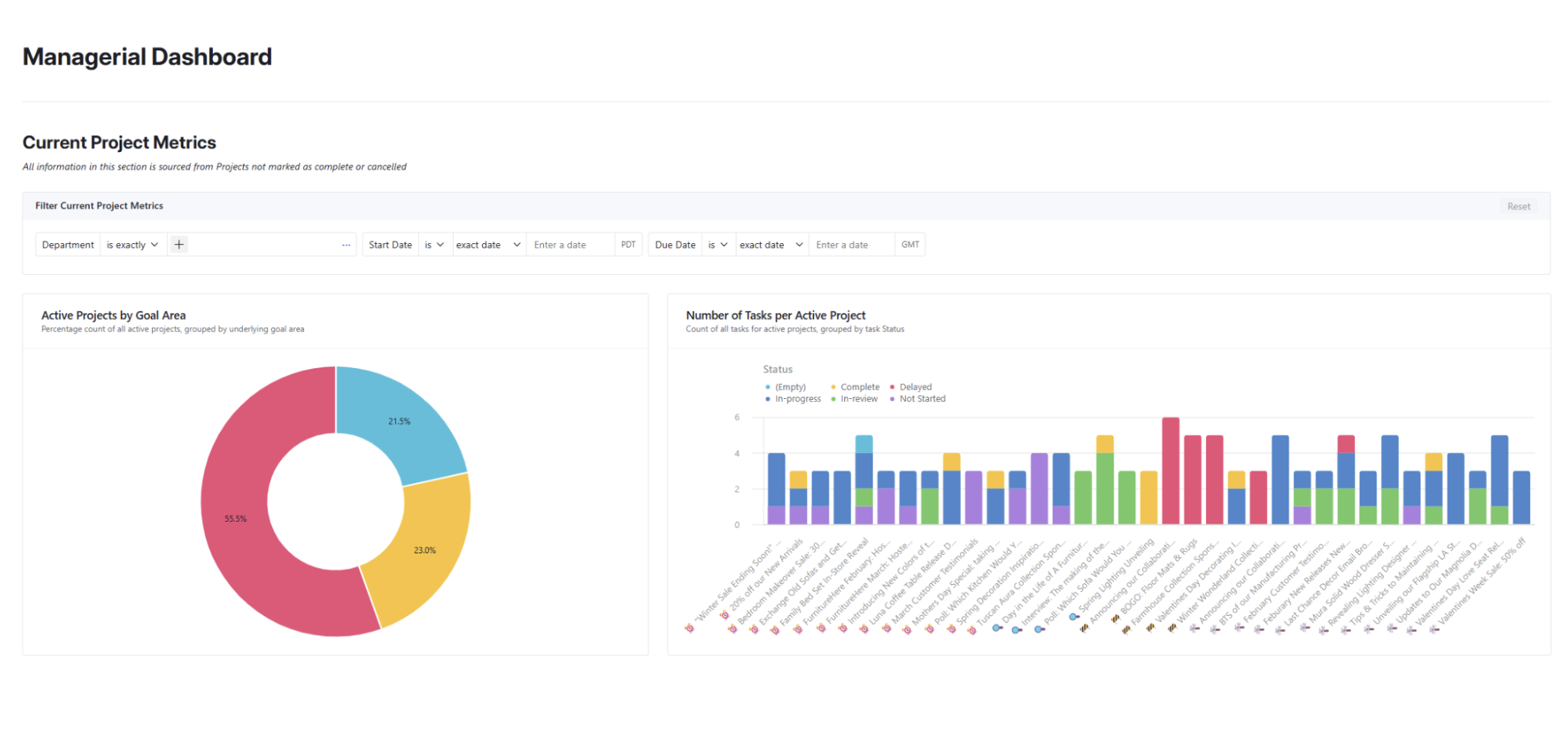
8. Reporting and Dashboards
In Airtable, you can create real-time dashboards for different members of the leadership team, tracking outputs, timelines, and team activity. This allows for specific, customized views for the various levels of leadership.
Each level of leadership can have its own relevant reporting dashboard. Our clients report a significant drop in ad hoc questions from leadership (and the hours it takes to answer those ad hoc questions)!
9. Automation and Integrations
Airtable can automate repetitive workflows like notifications, updates, and reminders. It also integrates with tools like Slack and email to keep teams informed. Airtable automations reduce manual work, improve consistency, and increase efficiency without requiring additional resources.
Summary
Airtable enables communications teams to move from fragmented systems to a single source of truth. This allows for greater transparency and accountability across the team while giving leadership access to real-time data. Ultimately, a centralized system supports better decision-making and creates stronger alignment between strategy and execution.
Book a free initial consultation with Claribase to discuss how we can support your team in building a strategic, centralized communications system.
Visit https://calendly.com/cherryyang/initial-consultation or book below.